1. The Power of Prioritization
2. Understanding Urgency vsImportance
4. Setting SMART Goals for Effective Time Management
5. Techniques to Avoid Procrastination and Stay Focused
6. The Role of Delegation in Task Management
7. Balancing Work and Personal Life Through Prioritization
Time Management Strategies: Task Prioritization: The Secret to Managing a Busy Schedule
1. The Power of Prioritization
In the realm of time management, the ability to discern which tasks warrant immediate attention and which can be deferred is a critical skill that stands at the core of productivity. This discernment, often referred to as prioritization, is not merely about choosing what to do first; it's about strategically ordering tasks based on a complex interplay of factors including urgency, importance, and resource availability.
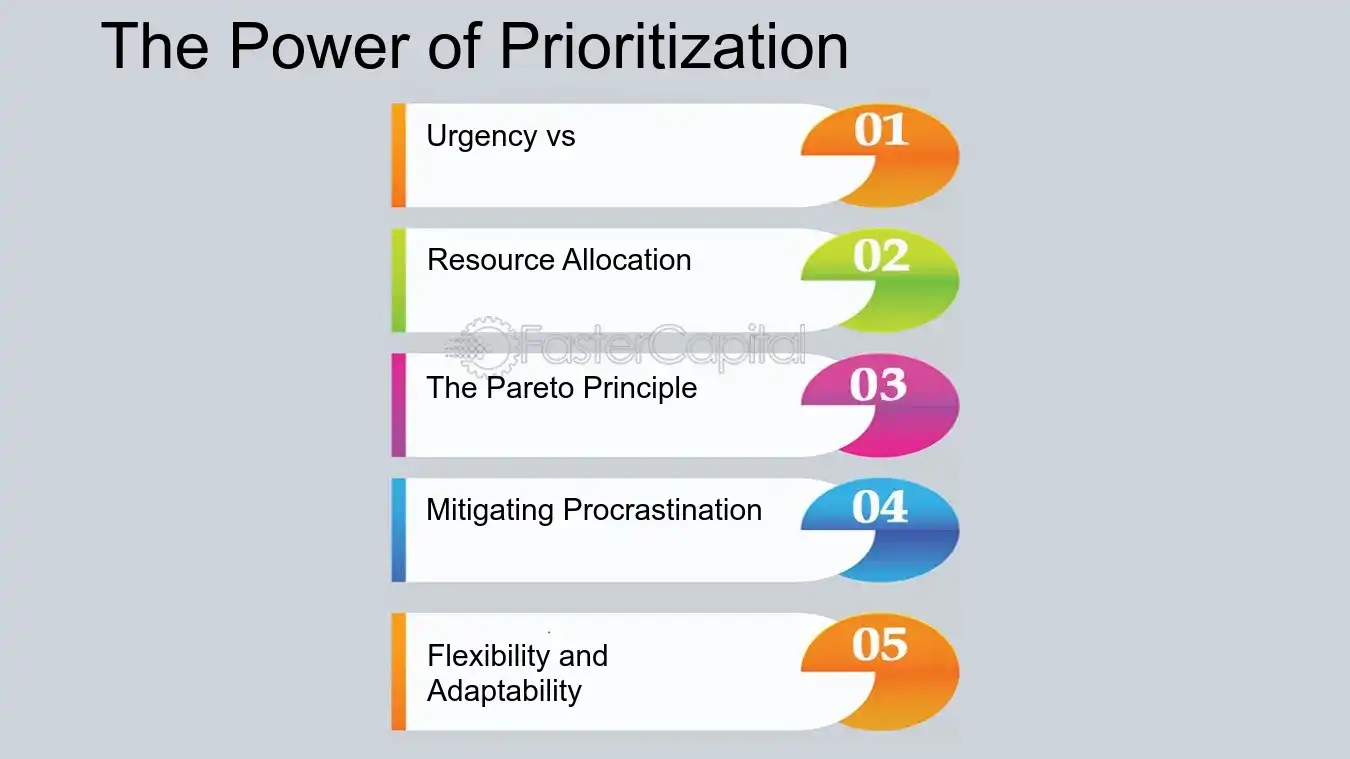
1. Urgency vs. Importance: The Eisenhower Matrix, a time-tested tool, distinguishes tasks based on their urgency and importance. Urgent tasks demand immediate attention due to time sensitivity, while important tasks contribute to long-term goals and values. For instance, responding to an email about a looming deadline is urgent, whereas planning a career development course is important.
2. Resource Allocation: Prioritization also involves astute resource management. It requires an evaluation of the time, energy, and tools at one's disposal. A task like preparing a presentation for a client meeting might take precedence over attending a routine team meeting if resources are limited and the presentation can potentially bring in new business.
3. The Pareto Principle: Often called the 80/20 rule, this principle suggests that 80% of outcomes come from 20% of efforts. Applying this to task management means identifying the 20% of tasks that will yield the most significant results. For example, focusing on nurturing relationships with key clients could lead to better business outcomes than spreading efforts thinly across all clients.
4. Mitigating Procrastination: Prioritization is also a potent antidote to procrastination. By breaking down larger projects into smaller, manageable tasks and prioritizing them, one can create a clear roadmap that mitigates the overwhelm that often leads to procrastination.
5. Flexibility and Adaptability: Effective prioritization is not set in stone; it adapts to changing circumstances. A sudden client request may require reshuffling the day's priorities, demonstrating that adaptability is just as important as the initial plan.
Through these lenses, prioritization emerges as a dynamic process that, when mastered, can transform an overwhelming schedule into a manageable and strategic plan of action. It empowers individuals to focus on what truly matters, ensuring that each moment is spent in a way that aligns with their goals and values. By mastering the art of prioritization, one can navigate the complexities of a busy schedule with grace and efficacy.
The Power of Prioritization - Time Management Strategies: Task Prioritization: The Secret to Managing a Busy Schedule
2. Understanding Urgency vsImportance
In the realm of time management, distinguishing between tasks that demand immediate attention and those that contribute to long-term objectives is crucial. This discernment is not just about sorting tasks into neat categories; it's about recognizing the subtle interplay between the immediate pressures and the overarching goals that shape our daily lives. Often, what appears pressing may not necessarily align with our long-term vision, and conversely, activities that significantly impact our future may not seem urgent in the moment.
1. The Quadrant Method: One effective way to navigate this complexity is through the Quadrant Method, which categorizes tasks into four quadrants based on urgency and importance:
- Quadrant 1: Tasks that are both urgent and important. These are the crises and deadlines that cannot be ignored.
- Quadrant 2: Tasks that are important but not urgent. These contribute to long-term missions and values.
- Quadrant 3: Tasks that are urgent but not important. Often these are interruptions with little value.
- Quadrant 4: Tasks that are neither urgent nor important. Typically, these are time-wasters.
2. The Pareto Principle: Another perspective is the Pareto Principle, which suggests that 80% of outcomes come from 20% of efforts. Identifying the 20% of tasks that are important and will yield significant results can help prioritize effectively.
3. The Eisenhower Matrix: Similar to the Quadrant Method, the Eisenhower Matrix helps in decision-making by assessing the urgency and importance of tasks, encouraging focus on what truly matters.
Example: Consider an email notification that pops up while you're working on a project report due in a week. The email feels urgent because it demands immediate attention, but the report is important as it impacts your professional goals. Employing the Quadrant Method, you would classify the report as a Quadrant 2 task and the email likely as a Quadrant 3 task, thus prioritizing the report over the email.
By applying these frameworks, individuals can navigate their schedules with a clearer understanding of where to allocate their time and energy, ensuring that they are not just busy, but productive.
3. A Tool for Decision-Making
In the realm of task prioritization, a strategic approach often distinguishes the highly productive from the perpetually busy. One such strategy involves categorizing tasks based on their urgency and importance, a method that allows individuals to focus on what truly moves the needle in their personal and professional lives. This quadrant-based system is more than a mere organizational tool; it's a decision-making compass that guides users in identifying not just the 'what' and 'when,' but also the 'why' and 'how' of daily tasks.
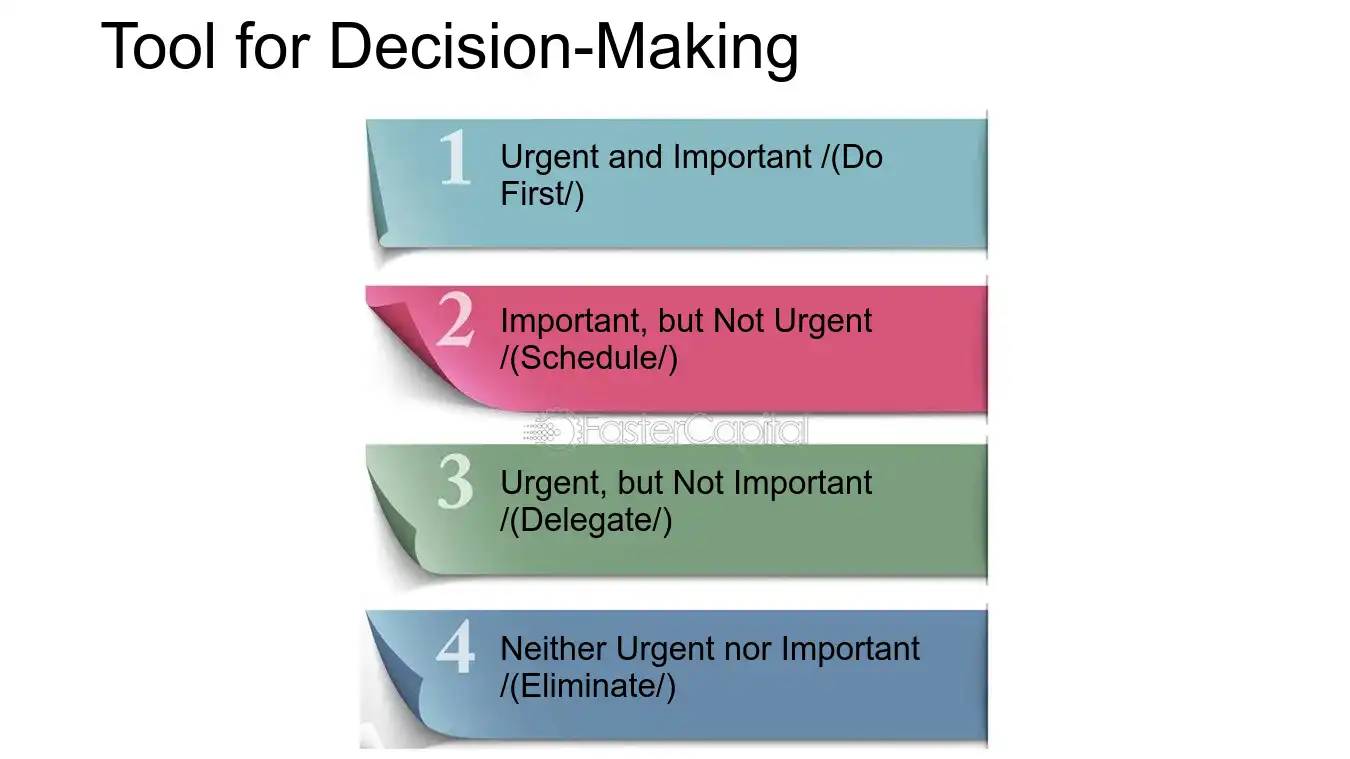
1. Urgent and Important (Do First): These tasks require immediate attention and are linked to significant outcomes. For example, if a project deadline is looming, completing the associated tasks falls into this quadrant. The key is not to let every task become urgent, which often happens due to poor planning.
2. Important, but Not Urgent (Schedule): Tasks that fall into this category are crucial for long-term success but do not need immediate action. An example might be professional development or relationship building. These should be scheduled into one's routine to ensure they are not overlooked.
3. Urgent, but Not Important (Delegate): These are the tasks that demand attention but may not necessarily contribute to one's goals. They are perfect for delegation. For instance, answering most emails can be urgent but not necessarily important to the core objectives of one's work.
4. Neither Urgent nor Important (Eliminate): Activities that don't have to be done anytime soon—or perhaps at all—can often be eliminated. These might include mindlessly scrolling through social media or attending meetings with no clear agenda or purpose.
By applying this matrix, individuals can navigate their schedules with precision, ensuring that each task is not only completed but also contributes to overarching goals. It's a transformative practice that turns the chaos of a busy schedule into an orchestrated symphony of productivity.
A Tool for Decision Making - Time Management Strategies: Task Prioritization: The Secret to Managing a Busy Schedule
4. Setting SMART Goals for Effective Time Management
In the realm of task prioritization, the alignment of objectives with measurable and attainable standards is paramount. This approach ensures that every minute spent is a step towards tangible progress. It's not merely about listing aspirations; it's about crafting a roadmap with clear milestones that are both challenging and achievable. This methodology transforms the abstract into the concrete, turning what might seem like daydreams into actionable items on one's daily agenda.
Consider the following perspectives and insights:
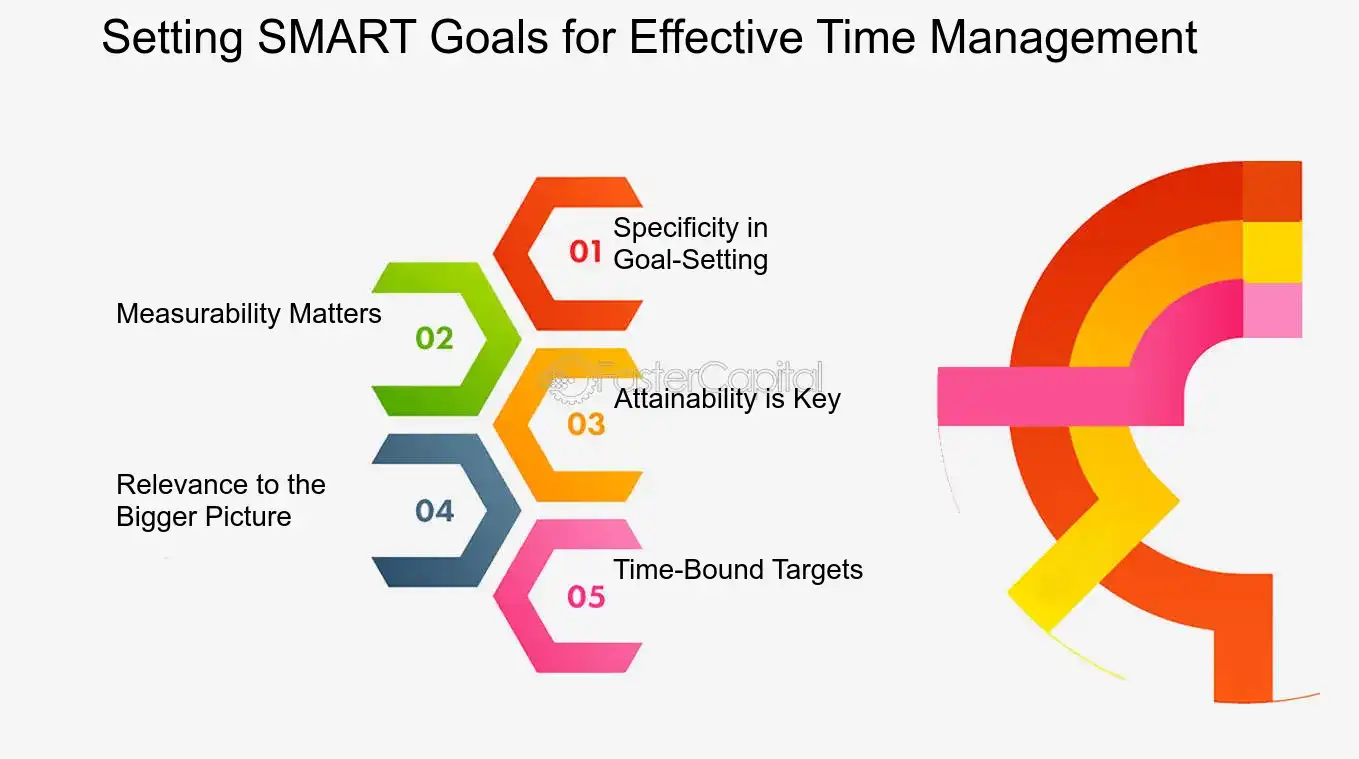
1. Specificity in Goal-Setting: Vague goals are the antithesis of productivity. For instance, rather than setting a goal to "improve sales," a more targeted aim would be to "increase sales by 10% within the next quarter by implementing a new customer outreach program."
2. Measurability Matters: To gauge progress, goals must be quantifiable. If the objective is to enhance efficiency, one might aim to "reduce the time spent on processing customer inquiries by 20% within six months through the adoption of a new CRM system."
3. Attainability is Key: Goals should stretch capabilities without being unfeasible. Aiming to "master advanced quantum physics in a week" is less realistic than "completing an introductory course on quantum physics by the end of the month."
4. Relevance to the Bigger Picture: Each goal should contribute to broader life or career ambitions. For example, if one aspires to become a published author, a relevant goal could be to "write 500 words daily to complete the first draft of a novel in three months."
5. Time-Bound Targets: Assigning deadlines creates urgency. Instead of indefinitely aiming to "learn Spanish," setting a goal to "achieve conversational fluency in Spanish before the upcoming family trip to Spain in six months" provides a clear timeline for action.
By integrating these principles, individuals can construct a scaffold for their daily tasks that not only supports their immediate to-do list but also elevates their long-term aspirations. This strategic alignment of tasks and goals ensures that every effort is a brick in the edifice of one's ultimate achievements.
Setting SMART Goals for Effective Time Management - Time Management Strategies: Task Prioritization: The Secret to Managing a Busy Schedule
5. Techniques to Avoid Procrastination and Stay Focused
In the quest to master one's schedule, the battle against procrastination is pivotal. This silent thief of time can be countered through strategic approaches that transform intention into action. By dissecting the anatomy of procrastination, we uncover a web of psychological barriers, often rooted in fear, perfectionism, or a lack of motivation. To dismantle these barriers, one must adopt a multifaceted strategy, weaving together self-awareness, environment optimization, and behavioral modification.
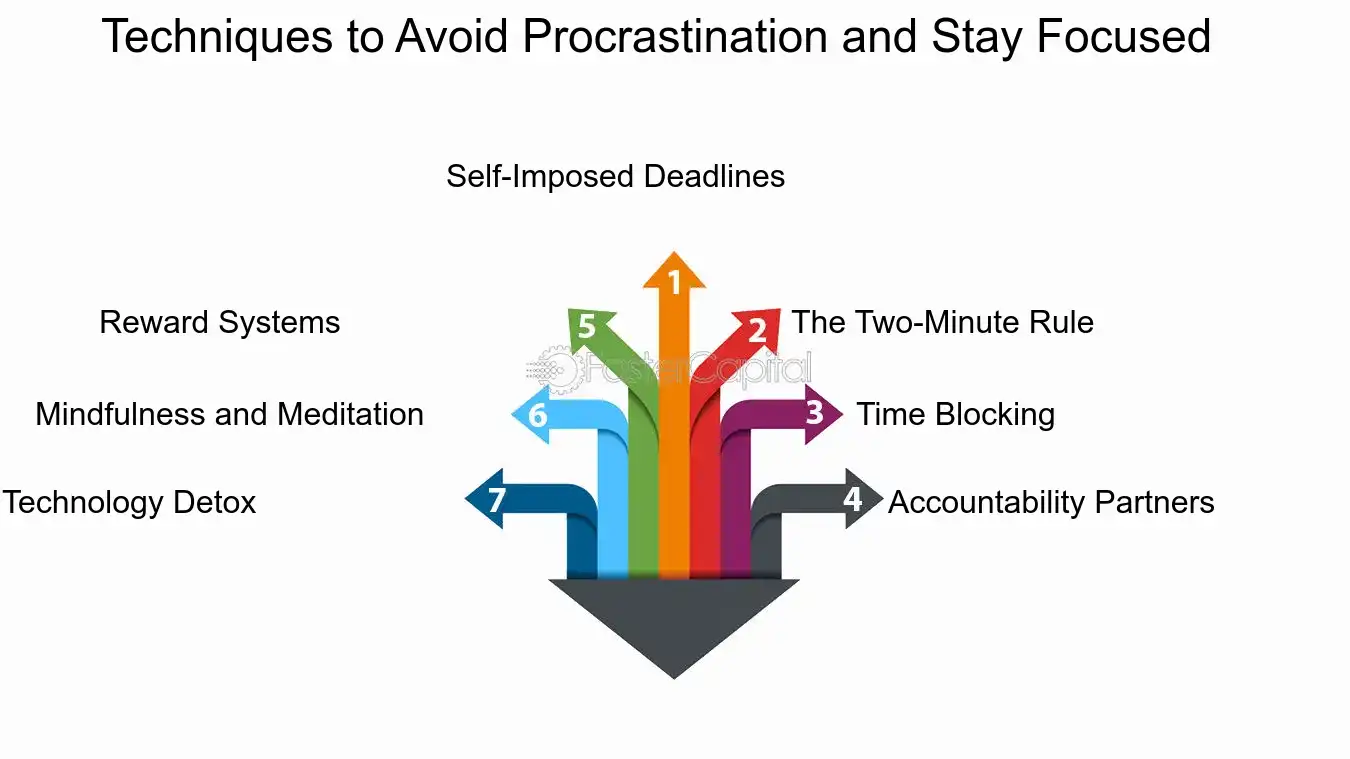
1. Self-Imposed Deadlines: Setting personal deadlines, slightly ahead of actual ones, can create a buffer and instill a sense of urgency. For instance, if a project is due on Friday, aim to complete it by Wednesday, allowing time for unforeseen delays.
2. The Two-Minute Rule: Embrace the philosophy that if a task takes less than two minutes, do it immediately. This principle helps clear small tasks that can accumulate and become overwhelming.
3. Time Blocking: Allocate specific blocks of time for different activities. During these periods, focus solely on the task at hand. For example, dedicate 9-11 AM for deep work, followed by a short break, then attend to emails.
4. Accountability Partners: Pair up with someone who can hold you accountable. Regular check-ins with this person can provide the external pressure needed to stay on track.
5. Reward Systems: Implement a reward system to celebrate small victories. Completing a challenging task might be followed by a favorite coffee or a walk in the park.
6. Mindfulness and Meditation: Practice mindfulness to stay present and reduce the anxiety that often leads to procrastination. Even a short daily meditation can enhance focus.
7. Technology Detox: Set aside technology-free times to eliminate digital distractions. This could mean turning off notifications or having screen-free hours.
By integrating these techniques, one can construct a robust defense against procrastination, paving the way for enhanced focus and productivity. As these strategies become habitual, they form the scaffolding for a disciplined and efficient approach to task management.
Techniques to Avoid Procrastination and Stay Focused - Time Management Strategies: Task Prioritization: The Secret to Managing a Busy Schedule
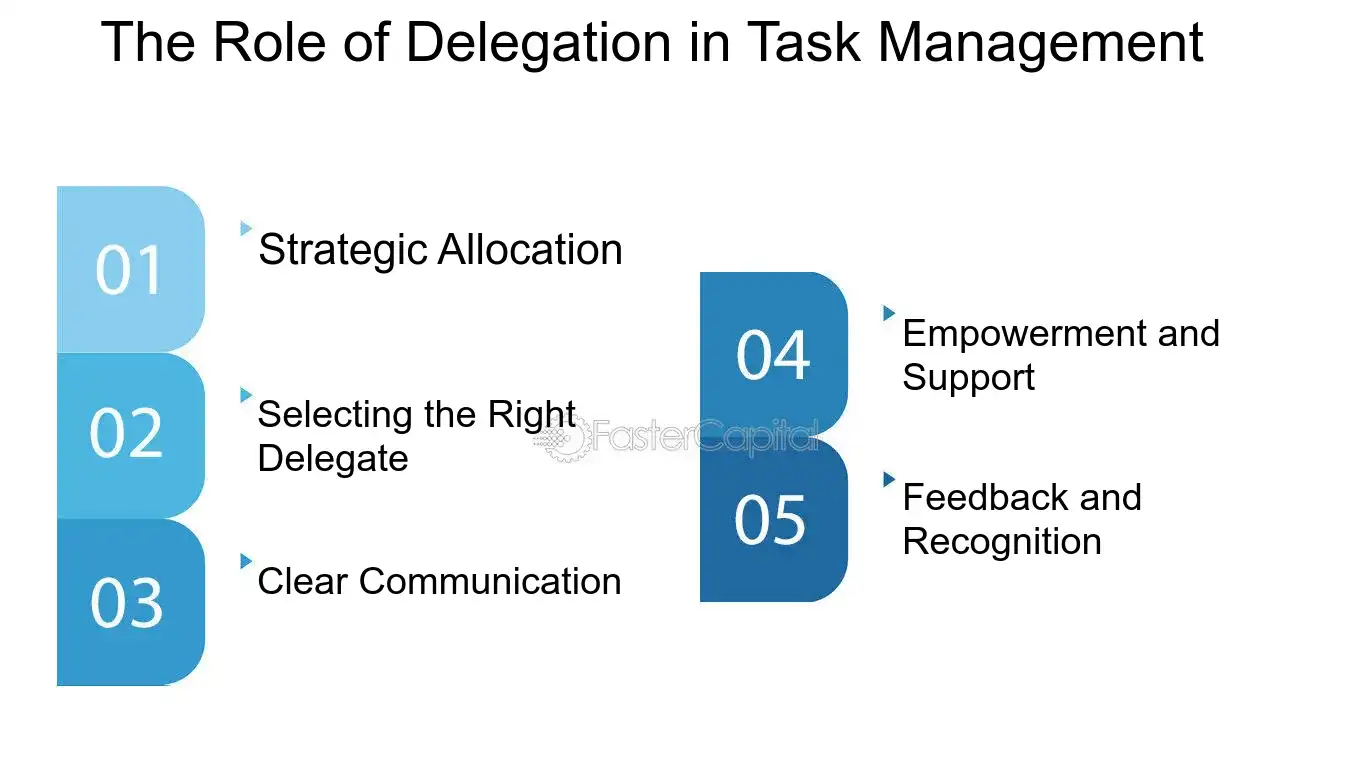
6. The Role of Delegation in Task Management
In the realm of effective task management, the art of assigning responsibilities is a pivotal strategy that can significantly enhance productivity and ensure the successful completion of objectives. This approach not only facilitates a more efficient distribution of workload but also empowers team members by entrusting them with ownership of their tasks, fostering a sense of accountability and professional growth. By judiciously allocating tasks, leaders can focus on high-priority activities that necessitate their expertise, while simultaneously nurturing a collaborative environment where each member's strengths are optimally utilized.
1. Strategic Allocation: The process begins with the identification of tasks that are suitable for delegation. These are typically activities that do not require the unique skills of the manager and can be effectively executed by other team members. For instance, routine administrative duties or data entry tasks can be assigned to support staff, freeing up managerial time for strategic planning.
2. Selecting the Right Delegate: Choosing the appropriate individual for each task is crucial. This decision should be based on the person's skills, interests, and developmental needs. For example, a project requiring meticulous attention to detail might be best suited for an employee who has demonstrated strong analytical abilities.
3. Clear Communication: When delegating, it is essential to communicate expectations clearly. This includes outlining the task objectives, deadlines, and any relevant standards or procedures. Providing a comprehensive brief ensures that the delegate is well-informed and aligned with the desired outcomes.
4. Empowerment and Support: Delegation is not merely about assigning tasks; it's about empowering individuals to make decisions and take initiative within their scope of work. Offering support and guidance, while avoiding micromanagement, encourages independent problem-solving and innovation.
5. Feedback and Recognition: Constructive feedback is vital for continuous improvement and motivation. Recognizing the efforts and accomplishments of team members reinforces the value of their contributions and encourages further engagement.
By incorporating these principles, leaders can create a dynamic where delegation becomes a tool for enhancing team capacity, driving engagement, and achieving organizational goals. For example, a marketing manager might delegate the task of social media management to a junior team member with a flair for digital trends, thereby capitalizing on the employee's strengths and interests while also contributing to the team's overall productivity. This strategic approach to delegation not only streamlines workflows but also contributes to a more empowered and capable team.
The Role of Delegation in Task Management - Time Management Strategies: Task Prioritization: The Secret to Managing a Busy Schedule
7. Balancing Work and Personal Life Through Prioritization
In the relentless pursuit of professional success, it's easy to let the scales tip too far, encroaching on the time and energy reserved for personal pursuits and relationships. The art of juggling these spheres lies not in the futile quest for perfect equilibrium but in the strategic allocation of resources—time, attention, and effort—to ensure that neither is neglected.
1. Establishing Clear Boundaries: It begins with setting definitive limits. For instance, one might decide that work emails will not be checked after 7 PM or during weekends. This simple rule carves out space for personal activities and signals to others that your time outside work is valued.
2. Prioritizing tasks by Urgency and importance: The Eisenhower Matrix serves as an excellent tool here, distinguishing between tasks that are urgent, important, both, or neither. By categorizing tasks, one can focus on what truly matters without being sidetracked by the trivial.
3. Delegation and Outsourcing: No one is an island, and recognizing when to delegate tasks at work or outsource domestic chores can free up significant time. For example, a busy professional might hire a cleaning service, thus reclaiming those hours for family time.
4. time Blocking for personal Activities: Just as meetings are scheduled during the workday, personal activities should be given the same respect. Whether it's an hour of reading before bed or a weekend hike, these activities should be non-negotiable appointments with oneself.
5. Mindfulness and Presence: When engaged in personal activities, be fully present. It's not enough to physically partake in a family dinner; one must also mentally disconnect from work to truly engage with loved ones.
By implementing these strategies, individuals can navigate the demands of their professional lives without sacrificing the richness of their personal experiences. It's a dynamic process that requires regular reassessment and adjustment, but with practice, it becomes a fulfilling way to live.
The entrepreneur always searches for change, responds to it, and exploits it as an opportunity.
8. Technology and Tools to Enhance Productivity
In the realm of task prioritization, the judicious application of technological advancements can be a game-changer. The right set of digital tools not only streamlines the process of organizing tasks but also ensures that each action taken is a step towards peak efficiency. From sophisticated project management software to simple yet powerful to-do list applications, the options available today can cater to the unique workflow of any individual or team. These solutions offer more than just reminders; they provide a platform for tracking progress, collaborating with team members, and even predicting potential bottlenecks.
1. Project Management Platforms:
- Example: Asana and Trello offer visual boards to categorize tasks into columns, making it easy to see the stage of each task at a glance.
- Benefit: Enhances clarity and collaboration, ensuring that everyone is aligned and aware of their responsibilities.
2. time Tracking tools:
- Example: Toggl allows users to record how much time they spend on each task, providing insights into where time is being invested.
- Benefit: Encourages accountability and helps in identifying areas where efficiency can be improved.
3. Automation Software:
- Example: Zapier connects different apps and automates workflows, turning repetitive tasks into automated processes.
- Benefit: Saves time and reduces the likelihood of human error.
4. Focus Enhancers:
- Example: Apps like Forest gamify the process of staying focused, discouraging the use of distracting websites and apps.
- Benefit: Helps maintain concentration on high-priority tasks.
5. Communication Tools:
- Example: Slack facilitates instant messaging and file sharing, which is crucial for remote and in-office teams alike.
- Benefit: Streamlines communication and reduces the need for lengthy email threads.
6. cloud Storage services:
- Example: Google Drive and Dropbox provide a secure place to store documents accessible from anywhere.
- Benefit: Ensures that all team members have access to the latest versions of documents and resources.
7. AI-Powered Assistants:
- Example: Virtual assistants can schedule meetings, set reminders, and even draft emails.
- Benefit: Offloads routine tasks, allowing focus on more complex and creative work.
Incorporating these tools into daily routines can transform the daunting task of managing a busy schedule into a more manageable and even enjoyable process. For instance, a marketing team might use a project management platform to track the progress of a campaign, while an individual freelancer might rely on time tracking tools to bill clients accurately. The key is to select the tools that resonate with one's personal or organizational workflow and to remain adaptable as needs evolve.
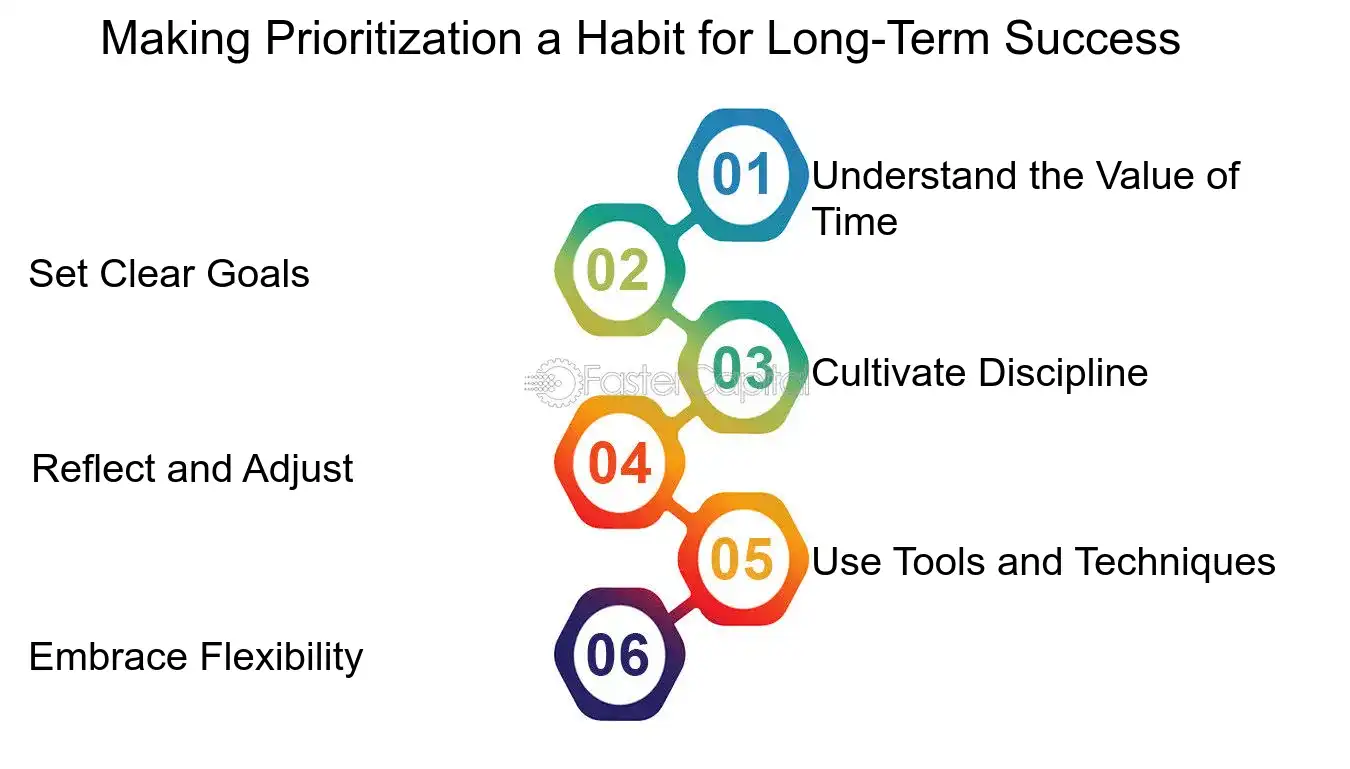
9. Making Prioritization a Habit for Long-Term Success
In the journey of mastering time management, the final stride involves transforming prioritization into a consistent practice. This is not merely a technique but a philosophy that, when ingrained into one's daily routine, can lead to remarkable efficiency and success. It's about making conscious choices every day, aligning actions with goals, and recognizing that not all tasks are created equal.
1. Understand the Value of Time: Recognize that time is a non-renewable resource. For instance, a professional turning down a low-priority meeting in favor of completing a project milestone is a practical application of valuing time over tasks that do not contribute to long-term objectives.
2. set Clear goals: Establishing clear, measurable goals provides direction for what tasks should take precedence. For example, a writer might prioritize writing a certain number of words daily to meet a publishing deadline.
3. Cultivate Discipline: discipline is the bridge between goals and accomplishment. It's the daily grind of choosing high-impact tasks over less critical ones. A student studying for entrance exams, despite the allure of social events, exemplifies this discipline.
4. Reflect and Adjust: At the end of each day, reflect on the tasks completed. This reflection can lead to better decisions about what to prioritize the next day. A manager might realize that delegating certain tasks frees up time for strategic planning.
5. Use Tools and Techniques: Leverage tools like the Eisenhower Matrix to categorize tasks by urgency and importance, or adopt techniques like time-blocking to dedicate specific hours to high-priority work.
6. Embrace Flexibility: While consistency is key, so is adaptability. Priorities can shift, and being flexible allows for adjusting plans without losing sight of the end goal. A business owner might pivot strategies in response to market changes while still aiming for annual revenue targets.
By embedding these principles into one's lifestyle, prioritization becomes second nature, paving the way for sustained achievement and personal growth. It's the subtle art of saying 'no' to the non-essential so that you can say 'yes' to success.
Making Prioritization a Habit for Long Term Success - Time Management Strategies: Task Prioritization: The Secret to Managing a Busy Schedule