SlideShare a Scribd company logo
ABSTRACT
All living creatures’ creation, proliferation and existence depend on the best climate con-
ditions. Since human activities do not generally occur under natural conditions, the prob-
lem of creating a comfortable interior environment with the purpose of meeting needs is
as old as the history of mankind. Human beings have been searching for ways to protect
or to benefit from the natural climatic conditions. Climate is one of the most important
factors that effect both architectural design and urban planning. Location, texture, shape,
direction, dimension, distance etc. of the building, should be analyzed and applied correct-
ly, in order to provide the best climate comfort indoors. In this paper, the effect of climate
on architectural designs will be examined with a detailed research of buildings under dif-
ferent climate conditions.
Keywords: Macro Climate, Mezzo Climate, Micro Climate, Sun, Wind, Climate Region
INTRODUCTION
Since human activities do not generally occur under natural conditions, the prob-
lem of creating a comfortable interior environment with the purpose of meeting
needs is as old as the history of mankind. One of the main principles of architec-
ture is to establish artificial environments that provide comfortable spaces for
human life. A building, which is the produce of architecture, is a physical envi-
ronment that is created in line with these requirements. Therefore, one of the
expected functions of a building is to provide an interior environment that is con-
trolled in terms of climatic comfort. Effects of climate conditions on a building
are certainly one of the most important natural factors that shape architectural
studies.
261
ARCHITECTURAL DESIGN BASED ON CLIMATIC DATA
Aslý Pýnar Biket
Faculty of Architecture, Yýldýz Technical University,
aertekin@yildiz.edu.tr
ARCHITECTURAL DESIGN BASED ON CLIMATIC DATA
Climate that is significant among building design criteria, is based on the average
of the effects collectively caused by atmospheric events somewhere on earth over
many years. It should be remembered that formation, reproduction and continua-
tion of living activities of all living creatures depend on suitable climate condi-
tions.
Climatic variables can be examined in three main groups as macro climate,
mezzo climate and micro climate. The climate that interacts according to geogra-
phy is called macroclimate; the climate that is based on regional flora and envi-
ronment is named as mezzo climate and microclimate is climate on a local scale.
The changes in the artificial environment that includes protection or utilization
decisions for the existing macro and mezzo climates form the microclimate.
Macro and mezzo climates are the same on an area where there is no settlement.
Landscape design made after construction of a building on land, surrounding
buildings and decisions about building form made during the design stage; make
up the microclimate of the building and its surroundings.
Climate is one of the most important factors that affect both architectural design
and urban planning. The identification, understanding and control of the climatic
effects at the location of the building are crucial even before design decisions are
made. Climate of a location develops by its geographical position on earth, height
above sea level, topography and flora. As a result of all these conditions, differ-
ent climate regions and thus different climatic design criteria are established.
Climate conditions are effective in arrangement of building designs, determina-
tion of requirements, selection of equipment and building method, and according-
ly the formation. Different climate systems generate regional architectural char-
acteristics.
Planning and forming the building in accordance with the regional climatic data
are based on enabling the building to get minimum heat during the hottest season
of the year and lose minimum heat during the coldest season of the year. Howev-
er, many buildings in our country today have plans and forms that were designed
without taking the regional climatic data into consideration.
Climatic comfort conditions in a building should be achieved by means of eco-
nomic usage of building materials and mechanical systems. In order to attain this
objective, the existing climate conditions should be used as data and solution
should be found in order to utilize the positive effects of the climate in building
form and building shell and eliminate the negative effects of the climate.
Asli Pýnar Biket
262
During the building design stage, the climate components that should be main-
tained should firstly be determined and then requirements should be specified
accordingly.
External climate components that affect the formation of internal environmental
climatic conditions are sunrays, air temperature, relative humidity, precipitation
and atmospheric actions.
The required thermal comfort values should be determined, the daily and annual
durations of use of the building should be specified according to the quantity and
activity levels of users of the building. This data should be used in making deci-
sions regarding the position, direction, form, interior planning and building shell
design of the building in urban planning and applying these decisions.
Climatic variables and requirements that are effective in design should be deter-
mined in full in order to prevent excessive heating, optimize cold airflow, use nat-
ural cooling methods in hot weather and increase heat gains (through natural
ways), ensure heat storage and proper heat distribution in cold weather.
From a scientific point of view, the factors and climatic components that deter-
mine the climate as an integration of the effects of all the meteorological factors
on earth in a long period of time in a certain region can be examined in three main
groups:
Sun and Temperature
Sun and therefore heat is one of the most important climate components because
the generally used indicator of climatic comfort is air temperature and relative
humidity. Sun is the most important energy source in lighting and heating forms
and surfaces in architecture. The sun is not only a heat source but also a signifi-
cant light source whose quality varies during the day and according to the sea-
sons. While applying architectural solutions in order to utilize the sun at the max-
imum level in winter, refraction components are needed in order to be protected
from the torrid heat of the sun in summer.
Pressure and Winds
Formation of a strong pressure zone is inevitable in the direction of the wind. It
is possible to increase or decrease the amount of this pressure by means of corri-
dors created between buildings. While airflow is needed in hot and humid
regions, shadowing measures should be taken in hot and dry regions. For this rea-
son, direction of buildings is determined according to the angle of sunrays in
some regions while planning is made according to the dominant wind directions
in summer in some other regions. Determination of wind requirement differs in
each climate region. Wind requirement is important during the entire year in low
latitudes, however protection is required in high latitudes. Wind factor that is
1st International CIB Endorsed METU Postgraduate Conference
Built Environment & Information Technologies, Ankara, 2006
263
needed according to climate regions should be taken into account when making
decisions about planning (story height and distances between buildings).
Precipitation and Humidity:
Precipitation type and amount that varies according to geographical properties
affect architectural design. Since the amount of precipitation affects humidity
rate, some measures may have to be taken in order to prevent discomfort in the
building and its surroundings. When various climate regions are observed, it is
seen that low rate of humidity is preferred in dry climates whereas it causes dis-
comfort in tropical climate regions.
URBAN PLANNING AND DESIGN ACCORDING TO DIFFERENT CLI-
MATE REGIONS
Cold Climate Region
The principle of maximum heat gain and minimum heat loss, stands out in build-
ing designs in these regions because of the rainy and cool weather.
Multi-layered and nested interior spaces that keep the heat inside and the cold air
outside should be designed in cold climate regions. Heat loss should be reduced
by using minimum floor area in residential buildings.
Segmented architecture should be avoided in urban scale. In urban architecture,
compact and intensive urban textures that are close to each other and do not allow
wind inside are observed. Fully and partially subterranean closed communication
channels that utilize the temperature of the earth and located underground or
Asli Pýnar Biket
264
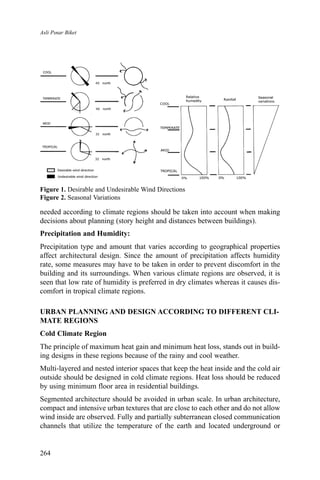
Figure 1. Desirable and Undesirable Wind Directions
Figure 2. Seasonal Variations
above ground, covered or semi-covered bazaars, coved streets and avenues with
arcades are the components of the architectural texture.
The settlement texture should be designed with the purpose of preventing the
effects of wind, and spaces that can utilize the sun at the maximum level should
be created while grouping big building units. The hillsides facing south and
southeast should be preferred during the selection of residential areas in order to
utilize the sun. Moreover, the middle sections of these hillsides can be suitable to
reduce the wind effect and to be protected from the cold airflow.
Natural materials such as bricks and adobe bricks that have high heat storage
capacities are often seen in building constructions in such climate regions. The
materials used should have high heat absorption capacity. The exterior surface is
smooth and dark colored (absorbent) and the roofs are pitched. Optimum sun ori-
entation is 12 degrees east.
Mild Climate Region
This kind of climate is the most suitable climate that provides comfort with min-
imum temperature difference between summer and winter. The characteristic of
mild climates is the presence of different climate conditions caused by the sea-
sons. Protection against cold weather and utilization of the sun should be provid-
ed during winter and the cooling effects of the wind should be benefited in sum-
mer.
In this kind of climate regions, the orientation in 17.5 degrees east from the south
provides the balance in heat dispersion. Orientation of high buildings should be
determined according to the wind effect.
Building formation should prevent wind and allow sun in the coldest period and
be wide surfaced and prevent sun during the hottest period. Surface coating mate-
rials such as grass, soil, asphalt, stone, etc. should be used in the spaces between
buildings. The materials to be used between buildings should be chosen to pre-
vent wind during the least hot period and accelerate wind, reflect sunrays and pro-
vide absorbent surface balance during the hottest period.
During the winter, sun control should be applied in the holes in the walls and ceil-
ings in order to utilize the sun at the maximum level. The dimensions and prop-
erties of the windows vary according to the regions. The same situation is also
valid for wall and roof materials and coatings. Sloping roofs are generally used
in this kind of climate regions.
Hot-Humid Climate Region
In hot-humid regions, excessive humidity is observed in addition to the pestifer-
ous excessive heat. For this reason, insulated roofs are used for sun and rain pro-
1st International CIB Endorsed METU Postgraduate Conference
Built Environment & Information Technologies, Ankara, 2006
265
tection and the environment of the building is opened. Thus, humidity problem is
reduced naturally with the help of air circulation.
The spaces where the main functions are dominant in buildings are constructed at
a higher level from the ground in order to allow the wind flow from the bottom.
Thus, excessive sun and humidity are prevented in the space. Another widely
used property is the court formations that allow wind and are controlled with
shadows.
In such regions, an unnested texture is dominant which is quite the contrary of
hot-dry regions. The reason of this is the placement of buildings in such a way
that do not block each other’s wind in order to reduce the effects of excessive sun
and humidity. Buildings are located properly to allow cool wind from both direc-
tions.
Airflows are generated by leaving spaces between the roof and the buildings in
order to reduce the effect of excessive sunrays and humidity in hot-humid
regions.
The ground floors generally have thick walls and fewer windows whereas upper
floors have more windows. The windows are placed in the wind direction with
the purpose of controlling sun and humidity effect by means of ventilation. Bal-
conies that are open to wind are also comforting architectural components.
Another characteristic of this kind of regions is wide-sided roofs that look like
hats in order to be protected from rain.
In hot-humid climate regions, high windy areas should be preferred. In solar ori-
entation, a 5-10 degrees deviation from south towards east can be suitable.
As a conclusion, it is necessary to find the right solutions for settlement and
design in terms of climate utilization and protection by taking neighboring build-
ings and close surroundings into consideration in building formation, as one of
the main principles of architecture is to create artificial environments that provide
comfortable spaces for the users.
The designs that are in compliance with the climate not only can meet the com-
fort requirements of the users but also are important in terms of sustainable ener-
gy maintenance for living and environmental issues, as they create high quality
interior spaces by using minimum resources.
As a result of fast population increase and unplanned urbanization, unhealthy,
characterless and insensitive new environments are being created without taking
physiological and climatic requirements into account in opposition to traditional
architectural systems. This process affects the quality of urban life negatively and
stands out as a planning and design problem.
Asli Pýnar Biket
266
REFERENCES
AKIN, T., (2001), Doðal Çevre Etmenlerine Baðlý Olarak, Yerleþme ve Bina Ölçeðinde Ýklim-
le Dengeli Konut Tasarýmý Denetleme Modeli, Y.T.Ü. Fen Bilimleri Enstitüsü, (unpublished
Ph.D Thesis), Ýstanbul
ARONIN, J.E. (1953), Climate and Architecture, U.S.A.
BERKÖZ, E. (1973), Binalarýn Yönlendiriliþ Durumlarýnýn Belirlenmesi.
CAMCIGIL, S.Z. (1990), Geleneksel Türk Evinde Ýklim ve Etkilerinin Araþtýrýlmasý, M.S.Ü.,
Ýstanbul.
ÇOBAN, M. (1999), Güneþ-Mimari Tasarým Ýliþkisi, Y.T.Ü., Ýstanbul.
GÖKSU, Ç. (1993), Güneþ ve Kent, O.D.T.Ü., Ankara
KÜRKDOÐU, Þ. (1982), Gün Iþýðýndan Yararlanmada En Etkili Olan Hacim Derinliðinin
Belirlenmesi, Ý.T.Ü.Yayýný, Ýstanbul.
RASMUSSEN, E. (1994), Yaþana Mimari, Remzi Kitabevi, Ýstanbul.
TAÞPINAR, A.S. (1977), Mimaride Gün Iþýðý & Gaziantep Kampüsüne Uygulamasý, O.D.T.Ü.
Basýmevi, Ankara.
UYDURAN, C. (1996), Adana Evlerinin Ýklimsel Açýdan Ýncelenmesi, M.S.Ü., Ýstanbul.
ZORER, G. (1992), Yapýlarda Isýsal Tasarým Ýlkeleri, Y.T.Ü.Yayýnlarý, Ýstanbul.
1st International CIB Endorsed METU Postgraduate Conference
Built Environment & Information Technologies, Ankara, 2006
267

More Related Content

PDF
Lecture 3 - climate and architecture
PDF
PDF
Climate and the built environment
DOCX
Chapter 05 bioclimatic_ok_ok
PDF
Control of tropical_microclimates_through_landscape_design
PDF
Paper arch073
PDF
2. Microclimate
PDF
Pgb unit iii b kameswara rao marthi
Lecture 3 - climate and architecture
Climate and the built environment
Chapter 05 bioclimatic_ok_ok
Control of tropical_microclimates_through_landscape_design
Paper arch073
2. Microclimate
Pgb unit iii b kameswara rao marthi

What's hot (20)

DOC
Landscape Planning for Climatic Adaptation
PDF
Sustainable Energy Resource Buildings: Some Relevant Feautures for Built Envi...
PPTX
Tropical architecture 2
PDF
Pgb unit iii a kameswara rao marthi
PDF
passive design strategies in composite & warm-humid climates.
PDF
Importance of climate to architectural designs in nigeria
PPTX
Summary of Climate Responsive Design by Richard Hyde
PDF
04c b3 o strategiesevora
PPTX
Climatology
PDF
Need of climate responsive measures for buildings
PDF
Bioclimatic Architecture
PDF
Application of Passive Cooling Techniques in Residential Buildings: A Case St...
PDF
Zero Energy Hotels and Sustainable Mobility in the Islands of Aegean Sea (Gre...
PDF
Urban Spaces - Climatic
DOCX
Climatology lesson plan
PPT
Dbn163 # 04. macro micro climate
PDF
37074 - IJAER ok 34180-34189
PPTX
Climatology in architecture
PDF
Designing for climate research paper
PDF
ARTICLE4.pdf
Landscape Planning for Climatic Adaptation
Sustainable Energy Resource Buildings: Some Relevant Feautures for Built Envi...
Tropical architecture 2
Pgb unit iii a kameswara rao marthi
passive design strategies in composite & warm-humid climates.
Importance of climate to architectural designs in nigeria
Summary of Climate Responsive Design by Richard Hyde
04c b3 o strategiesevora
Climatology
Need of climate responsive measures for buildings
Bioclimatic Architecture
Application of Passive Cooling Techniques in Residential Buildings: A Case St...
Zero Energy Hotels and Sustainable Mobility in the Islands of Aegean Sea (Gre...
Urban Spaces - Climatic
Climatology lesson plan
Dbn163 # 04. macro micro climate
37074 - IJAER ok 34180-34189
Climatology in architecture
Designing for climate research paper
ARTICLE4.pdf
Ad

Similar to Climatic architectural (20)

PPT
Sustainable Design Part Two: Climate Related Issues
PDF
Climate and buildings
PPTX
Climate Responsive Architecture
PDF
Lecture 3 Architecture and Climate Elements - Sun breakers design.pdf
PDF
Lecture 2 climatic zones
PDF
Factors affecting micro climate
PPTX
The Importance of Climatic Factors in Architectural and Urban Design
PPT
Urban Climates
PDF
Fanger comfert equation
PPTX
Lecture-06.pptx
DOCX
Climate
PPTX
The Köppen climate classification is one of the most widely used climate clas...
PDF
CitySpeak X: Green City. Cool City: Edward Ng - Urban heat and air ventilatio...
PDF
TRopical design First presentation.compl
PDF
Climate and building
PDF
Urban Man and Climate in Buildings
PPTX
Urban climate
PDF
ppweek7-160927175943.pdf
PDF
Climatology climatology climatology climatology
DOCX
Sustainable Design Part Two: Climate Related Issues
Climate and buildings
Climate Responsive Architecture
Lecture 3 Architecture and Climate Elements - Sun breakers design.pdf
Lecture 2 climatic zones
Factors affecting micro climate
The Importance of Climatic Factors in Architectural and Urban Design
Urban Climates
Fanger comfert equation
Lecture-06.pptx
Climate
The Köppen climate classification is one of the most widely used climate clas...
CitySpeak X: Green City. Cool City: Edward Ng - Urban heat and air ventilatio...
TRopical design First presentation.compl
Climate and building
Urban Man and Climate in Buildings
Urban climate
ppweek7-160927175943.pdf
Climatology climatology climatology climatology
Ad

Recently uploaded (20)

PPTX
UV-Visible spectroscopy..pptx UV-Visible Spectroscopy – Electronic Transition...
PDF
Weekly quiz Compilation Jan -July 25.pdf
PDF
احياء السادس العلمي - الفصل الثالث (التكاثر) منهج متميزين/كلية بغداد/موهوبين
PDF
RMMM.pdf make it easy to upload and study
PDF
LNK 2025 (2).pdf MWEHEHEHEHEHEHEHEHEHEHE
PPTX
Tissue processing ( HISTOPATHOLOGICAL TECHNIQUE
PDF
Trump Administration's workforce development strategy
PDF
What if we spent less time fighting change, and more time building what’s rig...
PDF
OBE - B.A.(HON'S) IN INTERIOR ARCHITECTURE -Ar.MOHIUDDIN.pdf
PDF
LDMMIA Reiki Yoga Finals Review Spring Summer
PPTX
Chinmaya Tiranga Azadi Quiz (Class 7-8 )
PPTX
Cell Types and Its function , kingdom of life
PDF
Computing-Curriculum for Schools in Ghana
PDF
Paper A Mock Exam 9_ Attempt review.pdf.
PDF
A GUIDE TO GENETICS FOR UNDERGRADUATE MEDICAL STUDENTS
PDF
Empowerment Technology for Senior High School Guide
PPTX
Radiologic_Anatomy_of_the_Brachial_plexus [final].pptx
PPTX
Final Presentation General Medicine 03-08-2024.pptx
PPTX
Introduction-to-Literarature-and-Literary-Studies-week-Prelim-coverage.pptx
PDF
medical_surgical_nursing_10th_edition_ignatavicius_TEST_BANK_pdf.pdf
UV-Visible spectroscopy..pptx UV-Visible Spectroscopy – Electronic Transition...
Weekly quiz Compilation Jan -July 25.pdf
احياء السادس العلمي - الفصل الثالث (التكاثر) منهج متميزين/كلية بغداد/موهوبين
RMMM.pdf make it easy to upload and study
LNK 2025 (2).pdf MWEHEHEHEHEHEHEHEHEHEHE
Tissue processing ( HISTOPATHOLOGICAL TECHNIQUE
Trump Administration's workforce development strategy
What if we spent less time fighting change, and more time building what’s rig...
OBE - B.A.(HON'S) IN INTERIOR ARCHITECTURE -Ar.MOHIUDDIN.pdf
LDMMIA Reiki Yoga Finals Review Spring Summer
Chinmaya Tiranga Azadi Quiz (Class 7-8 )
Cell Types and Its function , kingdom of life
Computing-Curriculum for Schools in Ghana
Paper A Mock Exam 9_ Attempt review.pdf.
A GUIDE TO GENETICS FOR UNDERGRADUATE MEDICAL STUDENTS
Empowerment Technology for Senior High School Guide
Radiologic_Anatomy_of_the_Brachial_plexus [final].pptx
Final Presentation General Medicine 03-08-2024.pptx
Introduction-to-Literarature-and-Literary-Studies-week-Prelim-coverage.pptx
medical_surgical_nursing_10th_edition_ignatavicius_TEST_BANK_pdf.pdf

Climatic architectural

  • 1. ABSTRACT All living creatures’ creation, proliferation and existence depend on the best climate con- ditions. Since human activities do not generally occur under natural conditions, the prob- lem of creating a comfortable interior environment with the purpose of meeting needs is as old as the history of mankind. Human beings have been searching for ways to protect or to benefit from the natural climatic conditions. Climate is one of the most important factors that effect both architectural design and urban planning. Location, texture, shape, direction, dimension, distance etc. of the building, should be analyzed and applied correct- ly, in order to provide the best climate comfort indoors. In this paper, the effect of climate on architectural designs will be examined with a detailed research of buildings under dif- ferent climate conditions. Keywords: Macro Climate, Mezzo Climate, Micro Climate, Sun, Wind, Climate Region INTRODUCTION Since human activities do not generally occur under natural conditions, the prob- lem of creating a comfortable interior environment with the purpose of meeting needs is as old as the history of mankind. One of the main principles of architec- ture is to establish artificial environments that provide comfortable spaces for human life. A building, which is the produce of architecture, is a physical envi- ronment that is created in line with these requirements. Therefore, one of the expected functions of a building is to provide an interior environment that is con- trolled in terms of climatic comfort. Effects of climate conditions on a building are certainly one of the most important natural factors that shape architectural studies. 261 ARCHITECTURAL DESIGN BASED ON CLIMATIC DATA Aslý Pýnar Biket Faculty of Architecture, Yýldýz Technical University, aertekin@yildiz.edu.tr
  • 2. ARCHITECTURAL DESIGN BASED ON CLIMATIC DATA Climate that is significant among building design criteria, is based on the average of the effects collectively caused by atmospheric events somewhere on earth over many years. It should be remembered that formation, reproduction and continua- tion of living activities of all living creatures depend on suitable climate condi- tions. Climatic variables can be examined in three main groups as macro climate, mezzo climate and micro climate. The climate that interacts according to geogra- phy is called macroclimate; the climate that is based on regional flora and envi- ronment is named as mezzo climate and microclimate is climate on a local scale. The changes in the artificial environment that includes protection or utilization decisions for the existing macro and mezzo climates form the microclimate. Macro and mezzo climates are the same on an area where there is no settlement. Landscape design made after construction of a building on land, surrounding buildings and decisions about building form made during the design stage; make up the microclimate of the building and its surroundings. Climate is one of the most important factors that affect both architectural design and urban planning. The identification, understanding and control of the climatic effects at the location of the building are crucial even before design decisions are made. Climate of a location develops by its geographical position on earth, height above sea level, topography and flora. As a result of all these conditions, differ- ent climate regions and thus different climatic design criteria are established. Climate conditions are effective in arrangement of building designs, determina- tion of requirements, selection of equipment and building method, and according- ly the formation. Different climate systems generate regional architectural char- acteristics. Planning and forming the building in accordance with the regional climatic data are based on enabling the building to get minimum heat during the hottest season of the year and lose minimum heat during the coldest season of the year. Howev- er, many buildings in our country today have plans and forms that were designed without taking the regional climatic data into consideration. Climatic comfort conditions in a building should be achieved by means of eco- nomic usage of building materials and mechanical systems. In order to attain this objective, the existing climate conditions should be used as data and solution should be found in order to utilize the positive effects of the climate in building form and building shell and eliminate the negative effects of the climate. Asli Pýnar Biket 262
  • 3. During the building design stage, the climate components that should be main- tained should firstly be determined and then requirements should be specified accordingly. External climate components that affect the formation of internal environmental climatic conditions are sunrays, air temperature, relative humidity, precipitation and atmospheric actions. The required thermal comfort values should be determined, the daily and annual durations of use of the building should be specified according to the quantity and activity levels of users of the building. This data should be used in making deci- sions regarding the position, direction, form, interior planning and building shell design of the building in urban planning and applying these decisions. Climatic variables and requirements that are effective in design should be deter- mined in full in order to prevent excessive heating, optimize cold airflow, use nat- ural cooling methods in hot weather and increase heat gains (through natural ways), ensure heat storage and proper heat distribution in cold weather. From a scientific point of view, the factors and climatic components that deter- mine the climate as an integration of the effects of all the meteorological factors on earth in a long period of time in a certain region can be examined in three main groups: Sun and Temperature Sun and therefore heat is one of the most important climate components because the generally used indicator of climatic comfort is air temperature and relative humidity. Sun is the most important energy source in lighting and heating forms and surfaces in architecture. The sun is not only a heat source but also a signifi- cant light source whose quality varies during the day and according to the sea- sons. While applying architectural solutions in order to utilize the sun at the max- imum level in winter, refraction components are needed in order to be protected from the torrid heat of the sun in summer. Pressure and Winds Formation of a strong pressure zone is inevitable in the direction of the wind. It is possible to increase or decrease the amount of this pressure by means of corri- dors created between buildings. While airflow is needed in hot and humid regions, shadowing measures should be taken in hot and dry regions. For this rea- son, direction of buildings is determined according to the angle of sunrays in some regions while planning is made according to the dominant wind directions in summer in some other regions. Determination of wind requirement differs in each climate region. Wind requirement is important during the entire year in low latitudes, however protection is required in high latitudes. Wind factor that is 1st International CIB Endorsed METU Postgraduate Conference Built Environment & Information Technologies, Ankara, 2006 263
  • 4. needed according to climate regions should be taken into account when making decisions about planning (story height and distances between buildings). Precipitation and Humidity: Precipitation type and amount that varies according to geographical properties affect architectural design. Since the amount of precipitation affects humidity rate, some measures may have to be taken in order to prevent discomfort in the building and its surroundings. When various climate regions are observed, it is seen that low rate of humidity is preferred in dry climates whereas it causes dis- comfort in tropical climate regions. URBAN PLANNING AND DESIGN ACCORDING TO DIFFERENT CLI- MATE REGIONS Cold Climate Region The principle of maximum heat gain and minimum heat loss, stands out in build- ing designs in these regions because of the rainy and cool weather. Multi-layered and nested interior spaces that keep the heat inside and the cold air outside should be designed in cold climate regions. Heat loss should be reduced by using minimum floor area in residential buildings. Segmented architecture should be avoided in urban scale. In urban architecture, compact and intensive urban textures that are close to each other and do not allow wind inside are observed. Fully and partially subterranean closed communication channels that utilize the temperature of the earth and located underground or Asli Pýnar Biket 264 Figure 1. Desirable and Undesirable Wind Directions Figure 2. Seasonal Variations
  • 5. above ground, covered or semi-covered bazaars, coved streets and avenues with arcades are the components of the architectural texture. The settlement texture should be designed with the purpose of preventing the effects of wind, and spaces that can utilize the sun at the maximum level should be created while grouping big building units. The hillsides facing south and southeast should be preferred during the selection of residential areas in order to utilize the sun. Moreover, the middle sections of these hillsides can be suitable to reduce the wind effect and to be protected from the cold airflow. Natural materials such as bricks and adobe bricks that have high heat storage capacities are often seen in building constructions in such climate regions. The materials used should have high heat absorption capacity. The exterior surface is smooth and dark colored (absorbent) and the roofs are pitched. Optimum sun ori- entation is 12 degrees east. Mild Climate Region This kind of climate is the most suitable climate that provides comfort with min- imum temperature difference between summer and winter. The characteristic of mild climates is the presence of different climate conditions caused by the sea- sons. Protection against cold weather and utilization of the sun should be provid- ed during winter and the cooling effects of the wind should be benefited in sum- mer. In this kind of climate regions, the orientation in 17.5 degrees east from the south provides the balance in heat dispersion. Orientation of high buildings should be determined according to the wind effect. Building formation should prevent wind and allow sun in the coldest period and be wide surfaced and prevent sun during the hottest period. Surface coating mate- rials such as grass, soil, asphalt, stone, etc. should be used in the spaces between buildings. The materials to be used between buildings should be chosen to pre- vent wind during the least hot period and accelerate wind, reflect sunrays and pro- vide absorbent surface balance during the hottest period. During the winter, sun control should be applied in the holes in the walls and ceil- ings in order to utilize the sun at the maximum level. The dimensions and prop- erties of the windows vary according to the regions. The same situation is also valid for wall and roof materials and coatings. Sloping roofs are generally used in this kind of climate regions. Hot-Humid Climate Region In hot-humid regions, excessive humidity is observed in addition to the pestifer- ous excessive heat. For this reason, insulated roofs are used for sun and rain pro- 1st International CIB Endorsed METU Postgraduate Conference Built Environment & Information Technologies, Ankara, 2006 265
  • 6. tection and the environment of the building is opened. Thus, humidity problem is reduced naturally with the help of air circulation. The spaces where the main functions are dominant in buildings are constructed at a higher level from the ground in order to allow the wind flow from the bottom. Thus, excessive sun and humidity are prevented in the space. Another widely used property is the court formations that allow wind and are controlled with shadows. In such regions, an unnested texture is dominant which is quite the contrary of hot-dry regions. The reason of this is the placement of buildings in such a way that do not block each other’s wind in order to reduce the effects of excessive sun and humidity. Buildings are located properly to allow cool wind from both direc- tions. Airflows are generated by leaving spaces between the roof and the buildings in order to reduce the effect of excessive sunrays and humidity in hot-humid regions. The ground floors generally have thick walls and fewer windows whereas upper floors have more windows. The windows are placed in the wind direction with the purpose of controlling sun and humidity effect by means of ventilation. Bal- conies that are open to wind are also comforting architectural components. Another characteristic of this kind of regions is wide-sided roofs that look like hats in order to be protected from rain. In hot-humid climate regions, high windy areas should be preferred. In solar ori- entation, a 5-10 degrees deviation from south towards east can be suitable. As a conclusion, it is necessary to find the right solutions for settlement and design in terms of climate utilization and protection by taking neighboring build- ings and close surroundings into consideration in building formation, as one of the main principles of architecture is to create artificial environments that provide comfortable spaces for the users. The designs that are in compliance with the climate not only can meet the com- fort requirements of the users but also are important in terms of sustainable ener- gy maintenance for living and environmental issues, as they create high quality interior spaces by using minimum resources. As a result of fast population increase and unplanned urbanization, unhealthy, characterless and insensitive new environments are being created without taking physiological and climatic requirements into account in opposition to traditional architectural systems. This process affects the quality of urban life negatively and stands out as a planning and design problem. Asli Pýnar Biket 266
  • 7. REFERENCES AKIN, T., (2001), Doðal Çevre Etmenlerine Baðlý Olarak, Yerleþme ve Bina Ölçeðinde Ýklim- le Dengeli Konut Tasarýmý Denetleme Modeli, Y.T.Ü. Fen Bilimleri Enstitüsü, (unpublished Ph.D Thesis), Ýstanbul ARONIN, J.E. (1953), Climate and Architecture, U.S.A. BERKÖZ, E. (1973), Binalarýn Yönlendiriliþ Durumlarýnýn Belirlenmesi. CAMCIGIL, S.Z. (1990), Geleneksel Türk Evinde Ýklim ve Etkilerinin Araþtýrýlmasý, M.S.Ü., Ýstanbul. ÇOBAN, M. (1999), Güneþ-Mimari Tasarým Ýliþkisi, Y.T.Ü., Ýstanbul. GÖKSU, Ç. (1993), Güneþ ve Kent, O.D.T.Ü., Ankara KÜRKDOÐU, Þ. (1982), Gün Iþýðýndan Yararlanmada En Etkili Olan Hacim Derinliðinin Belirlenmesi, Ý.T.Ü.Yayýný, Ýstanbul. RASMUSSEN, E. (1994), Yaþana Mimari, Remzi Kitabevi, Ýstanbul. TAÞPINAR, A.S. (1977), Mimaride Gün Iþýðý & Gaziantep Kampüsüne Uygulamasý, O.D.T.Ü. Basýmevi, Ankara. UYDURAN, C. (1996), Adana Evlerinin Ýklimsel Açýdan Ýncelenmesi, M.S.Ü., Ýstanbul. ZORER, G. (1992), Yapýlarda Isýsal Tasarým Ýlkeleri, Y.T.Ü.Yayýnlarý, Ýstanbul. 1st International CIB Endorsed METU Postgraduate Conference Built Environment & Information Technologies, Ankara, 2006 267